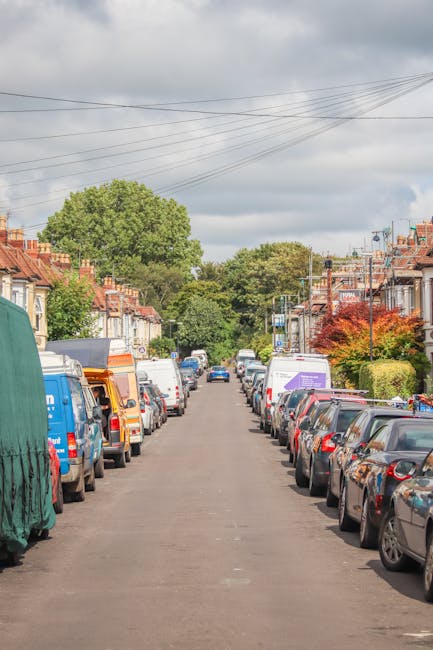
Purley flat removals practical guide for tight drives
Moving a flat in Purley sounds straightforward until you meet the drive. A narrow entrance, a parked car just where you need it, low branches, a tight turning circle, or a shared driveway with no room to swing the van around can turn a normal removal day into a bit of a puzzle. This Purley flat removals practical guide for tight drives is here to make that puzzle smaller. It focuses on the real stuff: access, timing, packing, van positioning, neighbour awareness, and the small decisions that save time when space is limited.
Whether you are moving out of a top-floor flat, shifting furniture from a converted house, or dealing with a short but awkward driveway, the aim is the same: keep the move calm, safe, and efficient. In practice, that means planning for the drive before the boxes are even sealed. And yes, that one step usually makes the biggest difference.
If you are comparing moving options in the area, it can also help to look at broader support such as flat removals in Croydon, man and van support, or the wider services overview to see how a move can be shaped around your property rather than forced through it.
Table of Contents
- Why Purley flat removals practical guide for tight drives Matters
- How Purley flat removals practical guide for tight drives Works
- Key Benefits and Practical Advantages
- Who This Is For and When It Makes Sense
- Step-by-Step Guidance
- Expert Tips for Better Results
- Common Mistakes to Avoid
- Tools, Resources and Recommendations
- Law, Compliance, Standards, or Best Practice
- Options, Methods, or Comparison Table
- Case Study or Real-World Example
- Practical Checklist
- Conclusion
- Frequently Asked Questions
Why Purley flat removals practical guide for tight drives Matters
Tight drives are not just mildly inconvenient. They shape the whole removal day. If a van cannot get close enough to the entrance, every item has to be carried farther. That adds time, increases the chance of scuffs, and makes fragile items harder to protect. With flats, where stairs, shared hallways, and limited parking already create pressure, access problems can stack up quickly.
Purley has a mix of property types, and some flat moves are easy enough. Others, not so much. You may have a long shared drive with very little width, a sloped entry, or a turning point that looks generous until a larger vehicle tries to use it. To be fair, most people only notice these issues on moving day, when it is a bit late to improvise.
The point of planning is not to make the day perfect. It is to make it predictable. A move with a tight drive often goes better when everyone knows where the van can stop, which items should be moved first, and what happens if a vehicle has to park farther away. That level of clarity cuts stress fast.
It also matters commercially. If you are getting help from professional movers, the team will usually work more efficiently when access is explained clearly in advance. That can influence vehicle choice, crew size, timing, and whether extra carrying distance needs to be factored in. If you are comparing options, pricing and quotes is worth reading alongside the move plan, because access details often affect the shape of the job.
How Purley flat removals practical guide for tight drives Works
At a practical level, a removal around a tight drive works by reducing unknowns before the van arrives. The job is split into three parts: assess the access, choose the right loading method, and protect the route from flat to vehicle. Simple idea. Not always simple in real life, but manageable.
First comes the assessment. That means checking the width of the drive, the height clearance if there are overhanging trees or arches, the surface condition, and whether the van can reverse or turn safely. If the property shares access with neighbours, it is worth checking who else uses the space and when. A polite chat can prevent a lot of awkward shuffling later.
Then comes vehicle and crew planning. A smaller removal van or a man-and-van setup may be easier than a larger vehicle where access is tight. In some cases, it is better to park slightly away and use trolleys, straps, and a well-organised carrying route. That sounds slower, but sometimes the slower-looking option is actually the smoother one. Funny how that works.
Finally, the move itself needs flow. Heavy items should be handled in an order that avoids bottlenecks at doorways and gateposts. Boxes should be staged close to the exit, but not in a way that blocks people carrying furniture. If you are also moving awkward or delicate items, such as upright instruments or large wardrobes, it helps to line up specialist support like furniture removals in Croydon or even piano removals where needed.
Key Benefits and Practical Advantages
Doing the move properly around a tight drive brings more benefits than just saving a few minutes.
- Less risk of damage: fewer awkward turns and shorter carrying routes usually mean fewer bumps, scrapes, and finger-pinching moments.
- Lower stress: everyone knows where things are going, so the day feels controlled rather than chaotic.
- Better use of labour: movers spend time lifting and loading, not waiting around trying to find a workable parking position.
- Cleaner property access: protecting the driveway, entrance, and hallway is easier when the route is planned.
- More suitable vehicle choice: the van matches the space, which makes manoeuvring much safer.
There is also a hidden benefit: better decision-making. When you plan around access constraints early, you are less likely to panic-pack, overfill boxes, or request last-minute help that is not actually suited to the property. The move becomes more deliberate. Less "we'll manage somehow" and more "right, this is the route."
If you want a broader view of moving support, the removal services page gives a useful sense of how different types of jobs are handled, while removal van options can be helpful when access is the main concern.
Who This Is For and When It Makes Sense
This guide is especially useful if any of these sound familiar:
- You live in a flat with shared or awkward access.
- Your drive is short, steep, narrow, or blocked by parking on busy days.
- You are moving on a street where loading space is limited.
- You have large furniture that will not easily turn at a corner or gate.
- You want to avoid a long carry from the van to the property entrance.
- You are arranging a move around work, school runs, or commuter times.
It is also relevant if you are weighing up self-managed moves against professional help. A small move can still become complicated when access is bad. A couple of chairs, a bed frame, and six boxes can be enough to create a bottleneck if the route is tight. People often underestimate that part. Then the boxes pile up near the door, the kettle disappears, and suddenly nobody is having a relaxing Saturday.
Students, renters, and first-time movers often need the clearest planning here. So do anyone moving with limited help or on a same-day timeline. For those situations, it may be worth looking at student removals or same-day removals if speed and flexibility matter more than a perfectly leisurely schedule.
Step-by-Step Guidance
Here is the most practical way to approach a flat move when the drive is tight.
- Measure the access properly. Check the drive width, gate openings, any turning points, and the space at the road edge. If you can, measure with a tape rather than guessing. Guessing is where headaches start.
- Photograph the route. A quick set of pictures from the gate to the front door helps show slopes, steps, low branches, and any awkward corners. If you are speaking to movers, these photos are gold.
- Decide where the van can actually stop. Do not plan around the ideal spot; plan around the realistic spot. A van parked two houses away is not a disaster if the route is clear and safe.
- Sort items by carrying difficulty. Put heavy, awkward items and fragile pieces into separate groups. Keep long or bulky items ready first so they do not delay the loading sequence.
- Prepare the flat exit. Clear the hallway, remove loose rugs, protect sharp corners, and keep doorways open. Small thing, big difference.
- Stage boxes near the exit. Stack them neatly so movers can work quickly without overreaching or twisting.
- Protect the access path. If the route includes steps, gravel, a wet patch, or a narrow paved edge, use coverings or mats where appropriate.
- Load in the right order. Heavier items and furniture usually go in first, then medium boxes, then fragile items secured near the end of the load plan.
- Keep one person in charge of decisions. Too many people giving instructions at once slows everything down. One point of contact keeps the move moving.
If you prefer the move to be handled with minimum fuss, a conversation about a man with a van arrangement can be a sensible middle ground for smaller flat moves where access is the issue more than the volume of items.
Expert Tips for Better Results
These are the little details that often separate a smooth move from a messy one.
1. Treat the driveway like part of the house
People often plan every box and forget the space that gets them to the van. The drive, path, and doorway are not background details. They are the moving route. Clear them first, not last.
2. Use smaller loads if the route is awkward
It can be tempting to carry as much as possible each trip. But on a tight route, overly large loads increase the risk of clipping walls or stumbling on a turn. A few more trips is often the better trade-off.
3. Keep a buffer for neighbours and pedestrians
Purley flats often sit in mixed residential streets, so people may still be coming and going while you move. Leave enough space for others and avoid blocking shared access longer than needed. A bit of patience goes a long way.
4. Use the time of day wisely
Early morning or mid-morning often works better than the rush around school drop-offs or evening traffic. Less traffic usually means less stress. Simple, but effective.
5. Protect the first and last 10 metres
Those are the most dangerous parts of the move: where items leave the property and where they enter the van. Extra caution there can prevent the majority of small accidents.
For bigger household moves, there is also value in checking whether house removals in Croydon make more sense than trying to squeeze a flat move into a one-size-fits-all plan. Not every property needs the same approach, and frankly, that is the point.
Common Mistakes to Avoid
Most access problems are predictable. The trouble is that people only recognise them after the van is already there.
- Not checking vehicle size in advance: a van that looks manageable online may still be awkward for your drive in real conditions.
- Leaving parking to chance: hoping there will be space on the day is not a strategy, it is a gamble.
- Packing before the route is clear: if the access is narrow, even perfect boxes will not help if they are stacked in the wrong place.
- Forgetting about height, not just width: branches, arches, and low walls can matter just as much as turning space.
- Overloading boxes: heavy boxes slow the move and make narrow passages harder to manage safely.
- Ignoring shared access rules: a drive used by neighbours may need to stay partly open.
One of the biggest mistakes is assuming a tight drive can be "navigated on the day." Sometimes it can. Often it can't, at least not without extra time and stress. Better to sort the plan while you are still calm and have a cup of tea in hand, rather than while somebody is trying to reverse a van in a tight lane and everyone is suddenly very aware of the wing mirrors.
Tools, Resources and Recommendations
You do not need a huge kit to move well. A few practical items go a long way.
- Tape measure: for drive width, doorways, furniture dimensions, and gate openings.
- Phone camera: for photos of the route, corners, steps, and access restrictions.
- Furniture blankets and wraps: to protect corners and surfaces where space is tight.
- Removal straps and trolleys: useful when carrying distance is longer than expected.
- Labels and a marker pen: especially useful if boxes need to be staged away from the flat entrance.
- Door stops: small but genuinely handy when you need hands-free movement.
On the service side, it can help to understand the difference between approaches. A man and van service is often a good fit for modest loads and tricky access, while a more structured removals service in Croydon may suit larger or more complex flat moves. If you need to store items between moving dates, storage in Croydon can also take pressure off a cramped exit plan.
Small clarification: more equipment does not automatically mean a better move. The right tools are the ones that match your route. That's it.
Law, Compliance, Standards, or Best Practice
For most flat removals, the practical side matters more than formal regulation, but there are still a few UK best-practice points worth keeping in mind. If a van has to stop on a road, the driver should park responsibly and legally, and any obstruction should be avoided where possible. On private property, access should be arranged with the occupier or managing party in a sensible, respectful way.
Health and safety also matters. Lifting should be done carefully, routes should be kept clear, and fragile or heavy items should not be forced through spaces that are too tight. If a move involves stairs, awkward loads, or repeated carrying over distance, it is best to slow down rather than push through. That is standard good practice, even when a customer is eager to get the day done.
Insurance is another sensible consideration. Accidents are rare when a move is planned well, but good operators still think about protection, handling, and accountability. It is worth reviewing the company's insurance and safety approach, alongside practical policies such as health and safety. If you are comparing terms, terms and conditions can help set expectations clearly.
There is also a customer-service angle. If a move ever needs clarification or raises an issue, having a clear process matters. Pages such as complaints procedure, payment and security, and the company's about us information can help build trust before moving day. That kind of reassurance is not flashy, but it is useful.
Options, Methods, or Comparison Table
When the drive is tight, the best moving method depends on access, volume, and how much lifting you want to handle yourself. Here is a simple comparison.
| Method | Best for | Strengths | Possible drawbacks |
|---|---|---|---|
| Small van / removal van | Narrow drives, limited turning space, modest flat loads | Easier to position, often less stressful on tight access | May require more trips if the load is large |
| Man and van | Smaller flat moves, student moves, quick relocations | Flexible, practical, usually easier to adapt to awkward access | Less suitable for larger household inventories |
| Full removals team | Large flat contents, bulky furniture, multi-room moves | More hands, more structure, better for complex loading | Needs clearer planning and more space management |
| Split move with storage | When access and timing do not line up neatly | Reduces pressure on moving day and short-term access issues | Creates an extra transfer step |
In many tight-drive situations, the decision is less about "best overall" and more about "best fit for this property." That distinction matters. A huge vehicle might be efficient in theory and awkward in practice. A smaller setup can look modest and work brilliantly. You know how it goes.
Case Study or Real-World Example
Imagine a second-floor flat in Purley with a shared drive and limited room to reverse. The residents need to move a sofa, a bed frame, two chests of drawers, and about twenty boxes. The drive is technically usable, but only if the vehicle enters carefully and does not block the neighbour's access.
In that situation, the most sensible plan is usually to:
- confirm the drive width before moving day,
- choose a van size that can safely turn or park at the road edge if necessary,
- stage boxes inside the flat near the door,
- move furniture first while the route is clear,
- keep one person available to manage the entrance and communicate with the driver.
The move may take a little longer than a straightforward house-to-house job, but it runs more smoothly because the access problem is handled before it becomes a problem. In real terms, that often means fewer pauses, less carrying back and forth, and far less frustration. No drama. Just a clean, sensible process.
If the schedule is tight, it is also worth checking whether a move needs the speed of same-day removals or whether a planned move with a little storage support is the smarter route. Not every move needs to be rushed just because the keys have changed hands.
Practical Checklist
Use this checklist the week before your move, then again on the day.
- Measure the drive, gate, and doorway widths.
- Take photos of the access route.
- Confirm whether the van can turn, reverse, or park nearby.
- Tell the mover about slopes, low branches, steps, and shared access.
- Label fragile, heavy, and awkward items clearly.
- Clear hallways, stairs, and the exit area.
- Protect walls, floors, and corners if needed.
- Keep essentials separate: keys, phone charger, documents, water, medication.
- Arrange neighbour awareness if access will be temporarily blocked.
- Check the move plan against the weather if the route is outdoors.
- Have a backup parking plan.
- Confirm the team knows which item should come out first.
A tidy checklist sounds obvious, but it stops the sort of little oversights that cause big delays. And on a tight drive, little oversights become very noticeable, very quickly.
Get a free quote today and see how much you can save.
Conclusion
A flat move in Purley with a tight drive is absolutely manageable when the access is treated as part of the move, not an afterthought. Measure carefully, plan the van position, reduce clutter near the exit, and choose the moving method that fits the property rather than forcing the property to fit the move.
The best jobs usually look simple on the day because the thinking happened beforehand. That is the real trick. Not magic, just preparation. If you get the access right, everything else tends to fall into place more easily. And that, honestly, makes a moving day feel much lighter.
For readers comparing practical support, it can be worth reviewing removal companies in Croydon or getting in touch through contact when you are ready to talk through the details. A few clear answers early on can save a lot of carrying later.
Frequently Asked Questions
What is the biggest challenge with Purley flat removals on a tight drive?
The biggest challenge is usually access, not the boxes themselves. If the van cannot park close enough, every item takes longer to move and the risk of damage rises. That is why checking turning space and parking first is so useful.
Should I measure my drive before booking a removal van?
Yes. Even a quick tape-measure check helps a lot. Width, height clearance, gate openings, and turning space all matter. A few numbers or photos can prevent the wrong van from being sent.
Is a man and van service enough for a flat move with poor access?
Often, yes, for smaller loads. A man and van setup can be a good fit when the access is awkward but the volume is modest. For larger inventories, you may need a fuller removals team.
What if the van cannot get onto the driveway?
That is not unusual. The move can still work if there is a safe parking point nearby and a clear carrying route. The important thing is to plan for the extra distance rather than discover it on the day.
How can I protect walls and door frames during a tight move?
Use furniture covers, blankets, and clear passageways. Keep people from crowding the doorway, and move larger items one at a time. It sounds basic, but basic is what prevents most scratches.
Do tight drives make removals more expensive?
They can affect cost because they may increase labour time or require a smaller vehicle or more careful planning. The exact impact depends on the property and the load, so it is best treated as a quote-specific factor rather than a fixed rule.
What should I tell the removals team before moving day?
Tell them about drive width, parking limits, any shared access, steps, slopes, low branches, and the size of bulky items. Photos are helpful too. The more accurate the picture, the better the plan.
Can I still move if the access route includes stairs or a long carry?
Yes, but the plan should reflect that. Longer carries and stairs are manageable when everyone knows what to expect and the load order is sensible. Slowing the pace a little is usually the right call.
What items are hardest to move through a tight drive?
Large sofas, wardrobes, mattresses, and awkward appliances tend to be the hardest. They are bulky, harder to turn, and more likely to clip walls or gateposts if the route is too tight.
Is it worth using storage if the move access is complicated?
Sometimes, yes. Storage can make the day easier if the flat is hard to access, if completion times are uncertain, or if you want to split the move into stages. It adds another step, but it can remove a lot of pressure.
How far in advance should I plan a move with tight access?
As early as you reasonably can. Even a short move benefits from early planning if access is awkward. The earlier you confirm parking, vehicle size, and loading order, the less last-minute scrambling you will have.
What is the simplest way to make a tight-drive removal less stressful?
Clear the route, confirm the parking plan, and keep communication simple. One person should coordinate decisions. That alone removes a surprising amount of friction, and the day feels much more under control.